Services
Areas
Event Types
How It Works
Book Guards Now → Client Login
Security Guides & FAQs
Pronto Guards
(747) 327-7380
Event Security Across California
Statewide Service · California

Book Event Security Online in 60 Seconds

Licensed officers across California — transparent instant pricing, booked online in about 60 seconds. No contracts, no callbacks.

Licensed & Trained Event Security Officers · Serving All of California

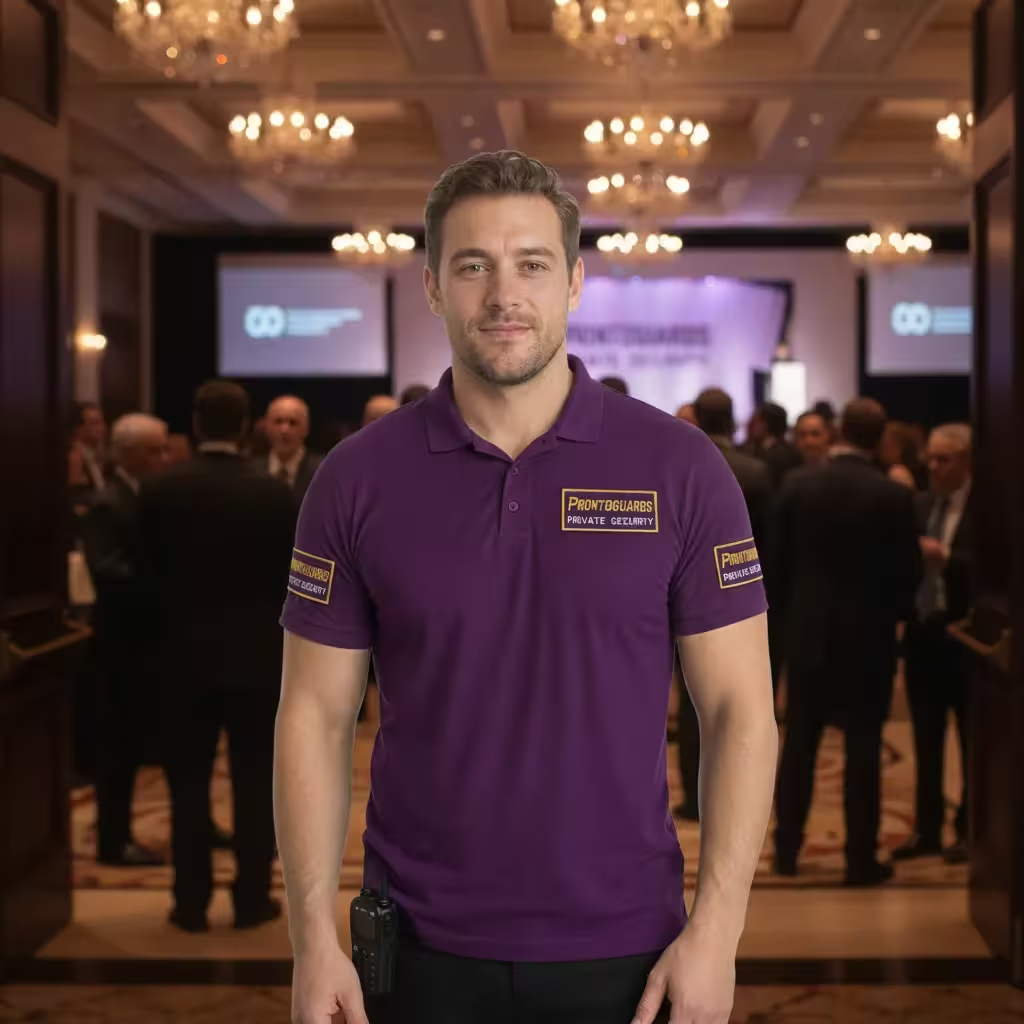
Licensed Event Security guards on duty in California

Licensed event security across California

Pronto Guards provides licensed, insured event security throughout California — for weddings, concerts, corporate functions, festivals, and private parties. Every officer holds a current BSIS Guard Card, and you book online in about 60 seconds with the price shown upfront — no quote to wait on, no sales call. From a 50-guest reception to a multi-thousand-person festival, we scale the team to the event.

600+online bookings
68,000+hours of coverage
435+events covered
24/7dispatch

Event security: what it actually involves

Event security is the discipline of keeping a gathering safe and controlled without changing its character — whether that gathering is a 150-guest wedding, a 5,000-person festival, or a corporate conference. The work is mostly preventive and mostly invisible: managing who comes in, maintaining a visible deterrent presence, watching the points where problems start, and de-escalating the small things before they become big ones. Done well, the guests barely notice it; done poorly, its absence is the thing everyone remembers.

The core functions are consistent across event types. Access and guest-list control at the entrance determines who gets in. Crowd management keeps people moving safely and prevents dangerous density at choke points. Asset protection covers the things that get targeted — gift tables, cash, equipment. Bar and behavior management handles the predictable friction of alcohol and crowds. And emergency readiness means officers know the exits and can direct an orderly response if something goes wrong. The mix and emphasis change with the event, but those functions are the spine of every job.

What separates competent event security from a person in a uniform is judgment under live conditions: knowing when to step in and when to hold position, how to turn away an uninvited guest without creating a scene, how to read a crowd's energy before it becomes a problem. That judgment is built from experience across many events, and it is the thing a brochure cannot fake and a checklist cannot teach.

What event security actually costs (shown upfront)

Most security companies make you request a quote and wait for a sales call. We show our pricing. Event security is priced per officer, per hour, with a four-hour minimum per guard. The rate depends on the type of officer your event needs:

Officer / coverage typeRate (per hour)Best for
Unarmed officer$40–$60/hrThe standard for the large majority of events — weddings, parties, corporate functions, community events. Access control, deterrence, crowd flow.
Armed officer$55–$90/hrEvents with cash handling, high-value property, or an assessed elevated risk. Carries the BSIS firearms permit.
Off-duty / experienced officer$80–$120/hrHigh-profile events and VIP coverage where law-enforcement-level training and presence add real value.

Real event examples

Short-notice bookings (within 24 hours) carry a 10% surcharge, shown before you pay. You see your exact total online before you book — no quote to wait on, no callback, no runaround. That transparency is the whole point of how we work.

How we scope your event (an operator’s view)

Sizing and positioning a security team is not guesswork — it follows from headcount, venue, and risk factors. Here is how an operations team actually scopes the event types we cover most:

  1. Start with the guest-count ratio

    The baseline is one officer per 50 guests for a general event — so 150 guests is about three officers, 250 is about five. This is the starting number, before adjusting. Concerts and festivals run leaner per head (one per 75–100) for general coverage but add specialized posts on top.

  2. Adjust for the real risk factors

    Alcohol service usually adds an officer — a bar changes crowd behavior and needs nearby coverage. Each additional entrance needs staffing. VIPs, cash handling, a large outdoor footprint, or a high-energy crowd each push the count up. Seated, single-entrance, no-alcohol events can run at or below the baseline. The goal is matching coverage to actual risk, not maximizing the headcount.

  3. Position officers where problems start

    The count is half the job; positioning is the other half. We staff the entrance properly first (most problems are prevented at the door), then cover the bar, the gift or asset areas, the floor, and the perimeter and exits. Officers flex as the event moves — entrance coverage shifts to the floor once arrivals finish.

  4. Plan the emergency picture before the event

    Good event security plans for the day going wrong, not just going right: officers know the exits, the egress routes stay clear, and the team can direct an orderly evacuation if needed. This planning happens before guests arrive and is the part that distinguishes professional coverage from a warm body at the door.

What actually goes wrong at events (and how it’s prevented)

Uninvited guests and access creep

The most common event problem is people who should not be there getting in — through an unwatched side entrance, a propped door, or a soft guest-list check. Prevention is disciplined entrance and perimeter control covering every access point, executed in a way that feels like hospitality rather than a checkpoint.

Gift, cash, and asset theft

Gift tables at weddings, cash boxes at fundraisers, and equipment at corporate events are soft targets precisely because attention is elsewhere. A quiet officer presence at those points removes the opportunity — one of the most concrete, preventable losses event security addresses.

Over-service and crowd friction

Where there is alcohol, the realistic worst case at most events is an over-served guest, not anything dramatic. Experienced officers manage it early and quietly — a word, a water, a ride — long before it becomes a scene. De-escalation is the craft, and it is most of what event security actually does.

Crowd density and egress at large events

At festivals and concerts, the serious risk is crowd dynamics — dangerous density at barricades and choke points, and the need for fast, orderly egress if the event clears. Prevention is trained crowd management, proper barricade and entry staffing, and exit routes planned and kept clear from the start.

Event security vs. the alternatives

People weighing event security often consider cheaper or informal options. Here is an honest comparison of what each actually gives you, so you can decide what your event really needs:

OptionWhat you actually getBest for
Licensed event securityBSIS-licensed, insured officers trained in access control, crowd management, and de-escalation, with a company accountable behind them.Any event where guest safety, asset protection, or access control matters — and where you want real liability coverage.
Venue / catering staffHelpful with flow and hospitality, but untrained in security, with no authority or liability for incidents.Small, low-risk, tightly-controlled gatherings with no alcohol and a closed guest list.
Off-duty policeReal law-enforcement authority and presence, but expensive, often limited in availability, and not always insured for private-event work.High-profile events with a specific elevated threat that genuinely warrants sworn authority.
No dedicated securityNothing — you and your venue absorb every access, theft, and behavior issue yourselves.Very small private gatherings where the host can personally manage the door and the risks.

How to hire event security: what to look for (and avoid)

Not all security companies are equal, and the differences are not always obvious until something goes wrong. Here is what actually matters when you hire event security — the questions a good provider answers readily and a weak one dodges:

  1. Verify the BSIS license (PPO number)

    In California, a legitimate security company holds a Bureau of Security and Investigative Services Private Patrol Operator (PPO) license, and every officer holds a BSIS Guard Card. Ask for the PPO number — a real company gives it without hesitation, and you can verify it on the BSIS website. Evasiveness here is the single clearest warning sign.

  2. Insist on transparent pricing

    A company confident in its value will tell you the rate and the total. If you cannot get any number without a sales call and your contact details, that is a model built on negotiation, not transparency. You should be able to see what an event costs before you commit.

  3. Ask whether officers are employees or subcontractors

    W-2 employees with workers' compensation and proper payroll are a sign of a real operation; a company relying on loose subcontractors carries more risk for you if something goes wrong. It is a fair question, and the answer tells you a lot.

  4. Confirm insurance

    A legitimate provider carries liability insurance — commonly $1,000,000 per occurrence — and will confirm it. An uninsured 'guard' leaves you exposed. Ask, and do not accept a vague answer.

  5. Make sure they scope your event honestly

    A good provider asks about your guest count, alcohol, venue, entrances, and any VIPs — and recommends a guard count that matches the real risk, not the biggest invoice. Be wary of both under-staffing to win on price and over-staffing to pad the bill. Honest scoping is a sign you are dealing with operators, not salespeople.

Security for every kind of event

Weddings

Discreet, plainclothes-capable officers for ceremonies and receptions — guest-list control at the entrance, gift-table coverage, bar-area management, and a calm presence that stays in the background.

Concerts & festivals

Crowd-trained officers for ticketed and public events — barricade and stage-front lines, entry screening, backstage and VIP access control, and crowd-flow management that keeps lines moving.

Corporate events

Uniformed or plainclothes officers for conferences, product launches, and galas — badge and access control, lobby and registration coverage, and VIP protection.

Private parties

Officers for milestone celebrations and estate parties — gate and guest-list enforcement, parking-area watch, and a low-key interior presence.

A licensed California security company — accountable

  • Licensed California security operator (BSIS PPO)
  • Every officer holds a current BSIS Guard Card
  • Founded 2019 · 600+ bookings · 435+ events covered
  • Transparent online pricing — booked in about 60 seconds
CA BSIS Licensed
Founded2019
CoverageStatewide · 24/7

Book event security in four steps

Choose your guards

Pick unarmed, armed, or off-duty officers and set how many you need.

Set the schedule

Add your date, hours, and any extra days. Watch the per-guard, per-hour price update live.

Add the details

Give us the venue or site address and what the job involves so officers arrive ready.

Book & confirm

Pay securely online and get instant confirmation. We assign and brief your officers.

Book event security in your city

We run dedicated local teams across California. Book in the city where your event or job is:

Event Security FAQs

How much does event security cost in California?

Event security is priced by the hour, per guard, with a 4-hour minimum per guard. Rates run from about $40 to $120 per guard per hour depending on guard type — unarmed, armed, or off-duty officer — and shift length, with longer shifts billed at lower hourly tiers. You see your exact total instantly when you book online, with no quote to wait for.

How many security guards do I need for my event?

A common guideline is one officer per 50 guests, so a 150-guest event typically uses three officers and a 250-guest event about five. Venue size, alcohol service, and whether the event is public or private all affect the count. Book-a-Guard suggests a number from your attendance and lets you adjust before you pay.

Are your event security guards licensed and insured?

Yes. Pronto Guards operates under a California BSIS Private Patrol Operator license. Every officer we deploy holds a current BSIS Guard Card.

Can you provide event security on short notice?

Yes. You can book online in about 60 seconds with instant confirmation, including same-week and next-day events. Bookings within 24 hours of the start time carry a 10% short-notice surcharge, shown before you pay.

What cities do you cover for event security?

Pronto Guards provides event security across California, with dedicated local teams throughout Ventura County and the Conejo Valley — Simi Valley, Thousand Oaks, Westlake Village, Calabasas, Oxnard, Camarillo, Ventura, and more. Tell us your venue address when you book and we assign officers familiar with the area.

How is event security priced?

Per officer, per hour, with a four-hour minimum per guard. Rates run about $40–$120 depending on whether you need unarmed, armed, or experienced off-duty officers. You see your exact total online before booking — no quote request required.

How many security guards does my event need?

Start with one officer per 50 guests for a general event (one per 75–100 for festivals), then adjust up for alcohol, multiple entrances, VIPs, cash, or a large footprint. A 150-guest event is typically three officers; a 300-guest gala about six. Our booking tool suggests a count from your details.

Need event security in California?

Book licensed officers online in about 60 seconds — exact price shown before you pay.

Order Guards Now →
Licensed CA security Call (747) 327-7380 24/7 dispatch