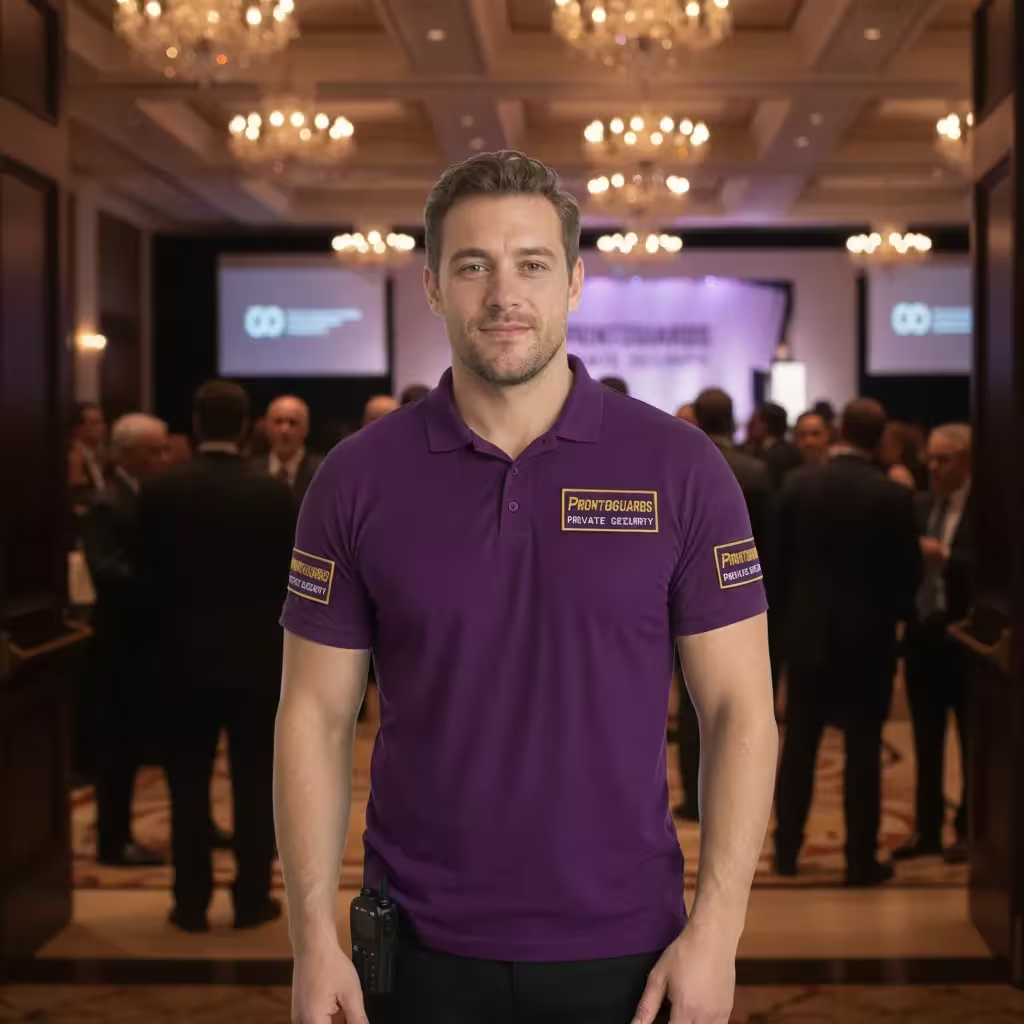
Licensed officers across California — transparent instant pricing, booked online in about 60 seconds. No contracts, no callbacks.
Licensed & Trained Executive Protection & Bodyguards Officers · Serving All of California
Pronto Guards provides discreet, professional close protection throughout California — for executives, visiting principals, high-profile guests, and private clients. Our approach is low-profile by default: advance work, route planning, and a calm protective presence that fits the setting rather than drawing attention to it. Plainclothes and armed options are available based on the assessed need.
New to booking security online? See exactly how Book-a-Guard works — price and confirm licensed officers in about 60 seconds.
Executive protection is widely misunderstood as visible muscle. In reality, professional close protection is mostly quiet planning and low-profile presence — the goal is that nothing happens and, ideally, no one even notices the protection was there. The dramatic intervention is the failure case; the success case is an uneventful day made uneventful by work done in advance.
The discipline has distinct phases. Advance work comes first: assessing venues and routes, identifying access and exit points, and planning for contingencies before the principal moves. Close protection is the presence with the principal — plainclothes by default, calibrated to be felt only when needed. Coordination ties it together: working with venue security, event staff, drivers, and any other details so the principal moves smoothly. The visible officer is the smallest part of a job that is mostly preparation.
Good executive protection is built on judgment and discretion, not intimidation. Knowing how to keep a low profile, how to position without crowding, when to adjust a plan, and how to handle a situation quietly — that experience is what distinguishes genuine close protection from someone large in a suit. It is the least flashy and most skill-dependent kind of security work.
Close protection is priced per officer, per hour, and given the skill involved it sits at the upper end of security rates. We are transparent about it rather than hiding behind a quote:
| Officer / coverage type | Rate (per hour) | Best for |
|---|---|---|
| Plainclothes protection officer | $85–$120/hr | The standard for most close-protection work. Low-profile, experienced officers with advance-planning capability. |
| Armed close protection | $95–$120+/hr | When the assessment warrants an armed posture, under the required BSIS firearms permit. |
| Multi-officer detail | Scoped | Larger details for higher-profile principals or complex itineraries, priced to the scope and number of officers. |
Executive details are scoped with you directly because the work depends on the principal, the itinerary, and the assessed risk — but the pricing is always transparent, never a black box. Short-notice requests are accommodated where possible.
A protection detail is built from the threat picture, the itinerary, and the principal's needs. Here is how an operations team scopes it:
Before the principal moves, we assess the venues and routes, identify access and exit points, note contingencies, and coordinate with any on-site security. This planning is where most risk is removed — the protection on the day executes a plan made in advance, rather than improvising.
Many details are a single plainclothes officer; higher-profile principals or complex itineraries warrant more. The right size matches the assessed threat and the logistics, not a show of force. Over-sizing a detail draws the attention discretion is meant to avoid.
Plainclothes is the standard. The objective is a presence calibrated to be felt only when needed — close enough to protect, invisible enough not to change how the principal is perceived. Visibility is dialed up only when deterrence specifically calls for it.
Transport, venue security, event staff, other details — a good detail integrates all of it so the principal moves without friction. The coordination is invisible to everyone else and is much of what makes professional protection feel seamless.
The most common failure in protection work is skipping the advance — showing up without knowing the venue, the routes, or the exits. The fix is real advance work, which is where professional protection earns its value long before the principal arrives.
Too visible a presence can create attention and risk rather than reduce it; too little leaves a gap. Calibrating the profile to the situation — usually low — is a core judgment of the discipline.
A detail that does not coordinate with venue security, transport, and other parties creates seams an incident can exploit. Clean coordination closes them.
Close protection is skill-dependent; an officer without the training and judgment is a liability in a role that demands both. Experienced, properly licensed protection officers are the baseline, not an upgrade.
People weighing protection sometimes consider lighter options. Here is an honest comparison of what each actually provides:
| Option | What you get | Best for |
|---|---|---|
| Professional close protection | Trained, experienced officers with advance planning, discretion, and coordination — protection built around the principal. | Executives, public figures, and anyone with a genuine need for personal security done discreetly. |
| A standard security guard | A licensed officer trained for posts and events, but not for the advance work, mobility, and judgment close protection requires. | Fixed-location coverage, not personal protection of a moving principal. |
| No protection | Nothing — the principal and their team absorb all risk and logistics personally. | Situations with no assessed threat and no profile that warrants coverage. |
Protection is the security service where experience and discretion matter most, and where the wrong choice is least forgiving. Here is what to look for:
The company should hold a BSIS PPO license and the officers their Guard Cards; armed protection requires the additional BSIS firearms permit. Verify the PPO number on the BSIS site.
A serious provider treats advance planning — venue and route assessment, contingencies — as standard, not an add-on. If a company offers a body with no plan, that is not professional protection.
Ask how they approach visibility. The right answer for most details is low-profile and plainclothes. A company that leads with intimidation is selling the wrong thing.
Close protection demands genuinely experienced officers and a properly insured company behind them. Ask about both; a vague answer on either is a reason to look elsewhere.
A good provider sizes the detail to the real threat and itinerary, not to impress or to pad the bill. Honest assessment of how much protection you actually need is itself a sign of professionalism.
Coverage for executives and visiting leadership — airport meet-and-greet, secure transport, venue advance, and a discreet presence through meetings and events.
Close protection for high-profile guests at events, launches, and appearances — coordinated with venue security and tuned to keep a low profile.
Protective coverage at private residences and estates — access control, overnight presence, and coordination with existing household staff and systems.
Advance work before the principal arrives — venue and route assessment, contingency planning, and coordination so the day runs without friction.
Pick unarmed, armed, or off-duty officers and set how many you need.
Add your date, hours, and any extra days. Watch the per-guard, per-hour price update live.
Give us the venue or site address and what the job involves so officers arrive ready.
Pay securely online and get instant confirmation. We assign and brief your officers.
We run dedicated local teams across California. Book in the city where your event or job is:
Close protection is priced per officer, per hour, typically using plainclothes or off-duty officers given the skill level involved, with a 4-hour minimum. Rates depend on officer type, whether the detail is armed, and the scope of advance work. You see the price when you book online, and we can scope a multi-officer detail for larger needs.
Both armed and unarmed close protection are available based on the assessed need. Armed officers carry under the required BSIS firearms permit. Many details are plainclothes and unarmed by design, since a low profile is often the most effective posture.
Yes. Plainclothes, low-profile protection is our default approach — the goal is a calm, professional presence that fits the setting rather than drawing attention. We tailor visibility to the situation and the principal's preference.
Yes. Details typically include advance work — venue and route assessment and contingency planning — and can include secure transport coordination. Share the itinerary when you book and we plan around it.
Yes. Pronto Guards operates under a California BSIS Private Patrol Operator license. Officers hold current BSIS credentials, and armed officers hold the required firearms permit.
Close protection runs roughly $85–$120+ per officer per hour, reflecting the experience and skill involved, with details scoped to the principal, itinerary, and assessed risk. A half-day single-officer detail is around $475 including advance work. Pricing is transparent, never a black box.
Yes — discretion is the default. Most details are plainclothes and low-profile by design, calibrated to protect the principal without drawing attention or changing how they are perceived. Visibility is increased only when deterrence specifically calls for it.
Book licensed officers online in about 60 seconds — exact price shown before you pay.
Order Guards Now →