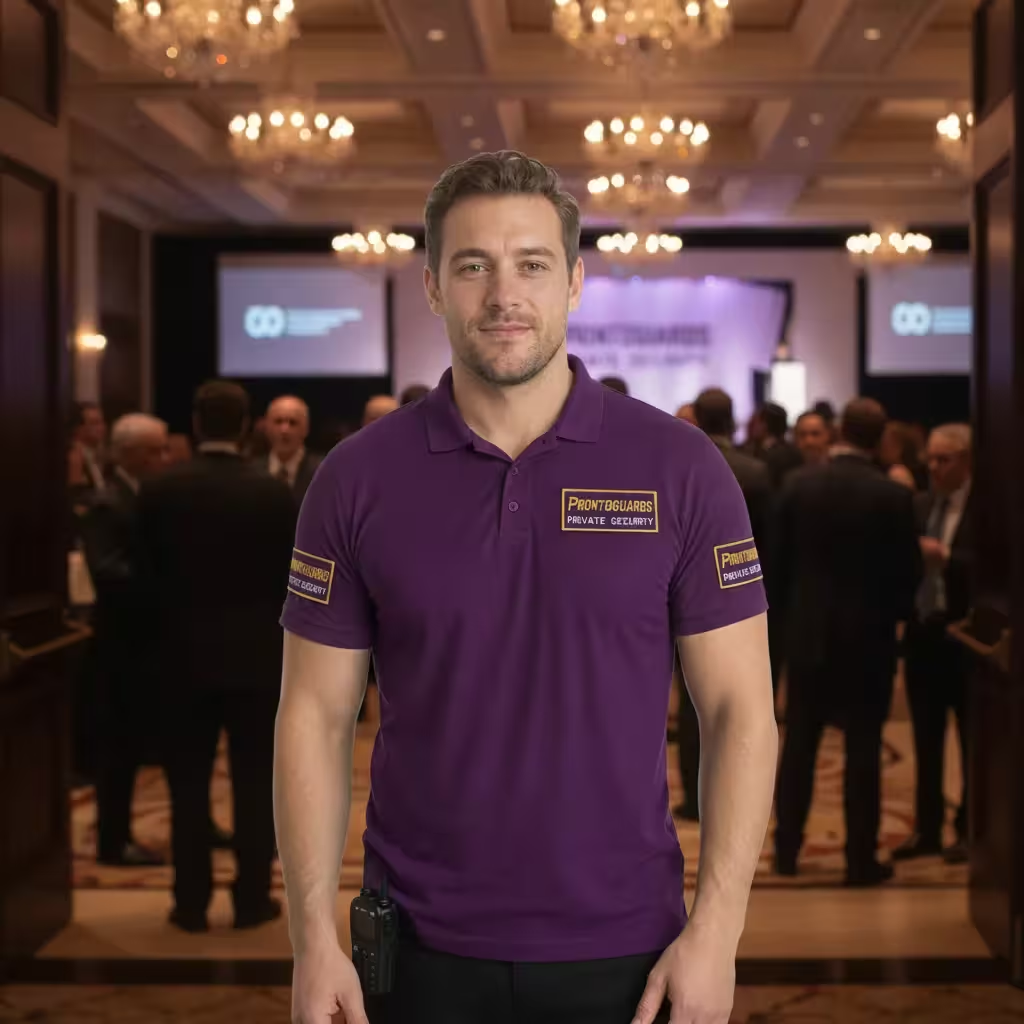
Licensed officers across California — transparent instant pricing, booked online in about 60 seconds. No contracts, no callbacks.
Licensed & Trained Security Guards Officers · Serving All of California
Pronto Guards provides licensed, insured security officers throughout California — unarmed, armed, and off-duty officers for events, businesses, construction sites, residential communities, and emergencies. Every officer holds a current BSIS Guard Card. Book online in about 60 seconds with the price shown upfront — no quote to wait on, no contract to sign.
New to booking security online? See exactly how Book-a-Guard works — price and confirm licensed officers in about 60 seconds.
A security guard's real job is prevention, not confrontation. The vast majority of what a good officer does is deter, observe, control access, and report — a visible, professional presence that stops most problems before they start. The dramatic intervention people picture is rare and, frankly, a sign that earlier prevention failed. Understanding this reframes what you are actually hiring: not muscle, but attentive judgment positioned where it matters.
Guards come in distinct types for distinct needs. Unarmed officers handle the large majority of work — events, retail and commercial coverage, patrol, access control. Armed officers carry a firearm under an additional BSIS permit and are used where there is cash, high-value property, or an assessed elevated threat. Off-duty and former law-enforcement officers bring sworn-level training and presence for sensitive or high-profile assignments. Matching the type to the actual risk is the core decision, and a good company helps you get it right rather than selling you up.
Beyond type, what separates a real security operation from a warm body in a uniform is the infrastructure behind the officer: proper BSIS licensing and training, background checks, liability insurance, supervision, and accountability. The officer at your site is the visible part; the licensed, insured company standing behind them is what you are actually buying.
Most security companies make you request a quote. We publish our pricing. Security guards are priced per officer, per hour, with a four-hour minimum. The rate is set by the type of officer:
| Officer / coverage type | Rate (per hour) | Best for |
|---|---|---|
| Unarmed officer | $40–$60/hr | Events, retail and commercial coverage, patrol, access control. The standard for most jobs. |
| Armed officer | $55–$90/hr | Cash handling, high-value property, or assessed elevated risk. Carries the BSIS firearms permit. |
| Off-duty / experienced officer | $80–$120/hr | Sensitive or high-profile assignments benefiting from law-enforcement-level training and presence. |
Short-notice bookings (within 24 hours) carry a 10% surcharge, shown before you pay. You see the exact rate and total online before booking — no quote runaround. A rate that looks far below this range usually means a corner is being cut on licensing, insurance, or payroll.
Getting the right coverage means matching officer type, count, and posture to the actual situation. Here is how an operations team scopes it:
We start by asking what could realistically go wrong. Cash, high-value goods, or a specific threat point toward armed coverage; everything else is usually well served unarmed. The honest answer is that most situations need unarmed officers — and a company that defaults to armed for everything is upselling, not assessing.
Coverage is driven by what needs watching and when. A single entrance and a defined space may need one officer; multiple access points, a large footprint, or simultaneous posts (gate, floor, perimeter) need more. Overnight and weekend gaps are where most sites are exposed, so that is often where coverage concentrates.
A standing officer gives continuous presence at a fixed point; mobile patrol gives documented, varied-time checks across a property at lower cost. We match the model to the risk and budget — and often combine them, with standing coverage during high-exposure periods and patrol during quieter ones.
Real coverage includes documented activity — patrol logs, access records, incident reports — and supervision behind the officer. This is the part that separates an accountable operation from a name on a shirt, and it is what you are paying a licensed company for.
The biggest risk is hiring someone who is not actually a licensed, insured officer. An unlicensed guard means no verified background check, no training standard, and no insurance if something goes wrong. The fix is verifying the PPO license and Guard Cards — non-negotiable.
Both under- and over-arming are problems: an unarmed officer at a genuine high-threat post, or an armed officer (and the liability that comes with a firearm) at a routine event. Honest risk assessment matches the type to the situation.
Theft and incidents cluster in the unwatched hours — overnight, weekends, shift changes. The fix is scoping coverage around when the site is actually exposed, not just convenient hours.
A guard with no supervision, no documentation, and no insured company behind them is a liability, not protection. Proper logs, supervision, and insurance are what make coverage real.
The most common security-guard question is which type you actually need. Here is an honest comparison so you can match the officer to your situation rather than over- or under-buying:
| Officer type | What you get | Best for |
|---|---|---|
| Unarmed officer | A licensed, trained, visible presence for deterrence, access control, observation, and reporting. Lower cost, lower liability. | The large majority of events, businesses, retail, patrol, and access-control posts. |
| Armed officer | Everything an unarmed officer offers plus a firearm under an additional BSIS permit, for a response capability. Higher cost and liability. | Cash handling, high-value property, dispensaries, or a specific assessed threat. |
| Off-duty / former law enforcement | Sworn-level training, authority, and presence. The premium tier. | High-profile events, sensitive situations, or details that genuinely benefit from law-enforcement experience. |
Security companies vary widely, and the differences matter most exactly when something goes wrong. Here is what to check before you hire — the things a real company answers readily:
A legitimate California security company holds a Private Patrol Operator license, and every officer holds a BSIS Guard Card. Ask for the PPO number, verify it on the BSIS site, and treat any evasiveness as the warning sign it is.
If you cannot get a number without a sales call, that is a model built on negotiation. A confident, honest company shows you the rate and the total upfront.
W-2 officers with workers' comp and real payroll indicate a genuine operation. Heavy reliance on loose subcontractors shifts risk onto you. It is a fair, revealing question.
A real provider carries liability coverage — commonly $1,000,000 per occurrence. An uninsured guard leaves you exposed. Ask, and do not accept vagueness.
A good company asks about your situation and recommends the officer type and count that fit the real risk — not the biggest invoice, and not a bargain that leaves you short. Honest scoping signals operators, not salespeople.
Uniformed, BSIS-licensed guards for access control, patrols, front-desk and lobby coverage, and a visible deterrent presence at events, businesses, and properties.
BSIS-licensed armed guards with the required firearms permit for higher-risk posts — cash handling, high-value sites, and situations that call for an elevated response capability.
Active and former sworn officers for situations that benefit from law-enforcement experience and presence, available for events and sensitive assignments.
Fixed-post coverage or mobile patrol with documented checks — scheduled rounds, incident reporting, and access logs that give you a record of the shift.
Pick unarmed, armed, or off-duty officers and set how many you need.
Add your date, hours, and any extra days. Watch the per-guard, per-hour price update live.
Give us the venue or site address and what the job involves so officers arrive ready.
Pay securely online and get instant confirmation. We assign and brief your officers.
We run dedicated local teams across California. Book in the city where your event or job is:
Security guards are priced per hour, per guard, with a 4-hour minimum. Rates run from about $40 to $120 per guard per hour depending on guard type — unarmed, armed, or off-duty officer — and shift length, with longer shifts at lower hourly tiers. You see your exact total when you book online.
Unarmed officers handle access control, patrols, and visible deterrence — the right fit for most events and business posts. Armed officers carry a firearm under the required BSIS permit and are used for higher-risk sites such as cash handling or high-value property. Book-a-Guard lets you choose the type that fits your situation.
Yes. Pronto Guards operates under a California BSIS Private Patrol Operator license. Every officer holds a current BSIS Guard Card, and armed officers hold the additional required firearms permit.
Yes. The minimum is 4 hours per guard, and you can book a single officer or a full team. You set the date, hours, and number of officers online and see the exact price before you pay.
You can book online in about 60 seconds with instant confirmation, including same-week and next-day coverage. Bookings within 24 hours of the start time carry a 10% short-notice surcharge, shown before you pay.
Roughly $40–$120 per officer per hour in California, with a four-hour minimum. Unarmed officers run about $40–$60, armed about $55–$90, and off-duty or experienced officers $80–$120. You see your exact rate and total online before booking.
Ask for the company's BSIS PPO license number and verify it on the Bureau of Security and Investigative Services website; individual officers must hold a BSIS Guard Card. A legitimate company provides its PPO number without hesitation.
Book licensed officers online in about 60 seconds — exact price shown before you pay.
Order Guards Now →